⚡ Key takeaways
- Metabolic switch (solid): after roughly 12 hours without food, liver glycogen runs down and the body leans on fat and ketones.
- Insulin and blood fats (modest): fasting schedules lower fasting glucose, insulin resistance and triglycerides slightly, about as much as eating less.
- Autophagy in people (unproven): the animal data are strong, but no study has shown how many hours a human needs.
- Stem cells (early): the three-day claim comes from a mouse study on blood-forming stem cells.
Fasting benefits are easy to promise and hard to pin to a clock. Most hour-by-hour charts online mix human measurements with mouse data.
This article separates what has been measured in people from what is still a guess.
Why I fast
From my own use
I used to eat 16:8 on weekdays and normally on weekends. During two months of 16:8 I broke through every plateau in the gym, and I could feel my body changing.
Now I fast a full day now and then, and at most twice a year for three days. I do it to give my body time for its own housekeeping and repair, and for my blood pressure and insulin. On fasting days I notice more bowel movements.
I have not measured anything, so this is an impression, not data.
Fasting benefits by hour: what is measured
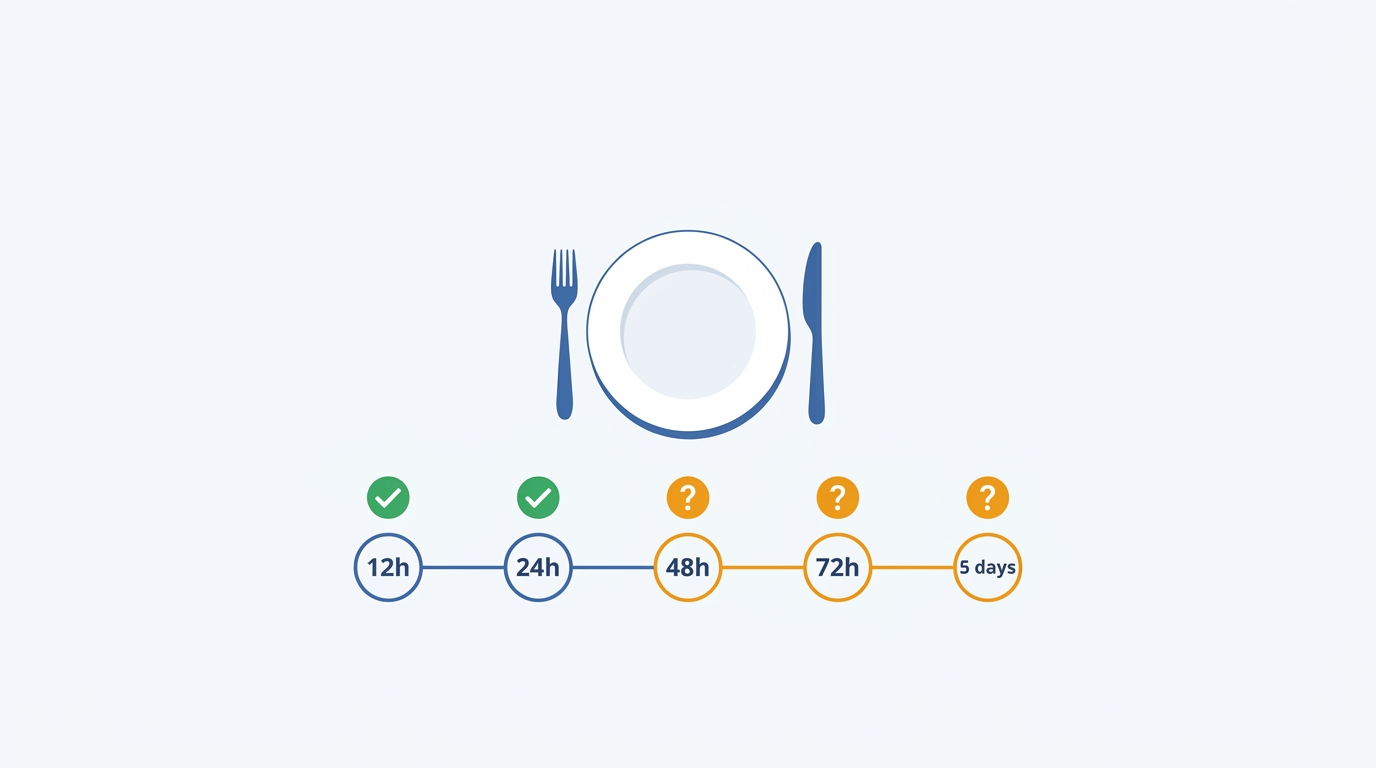
Table 1 follows a fast from the last meal to three weeks.
- Solid (green) means repeated human measurements.
- Limited (amber) means small or inconsistent human data.
Table 1 · Fasting timeline: what was measured in people
0 to 12 hours SOLID
The liver releases stored sugar (glycogen). After an overnight fast, the body already makes 40% to 50% of its glucose new, a process called gluconeogenesis.
12 to 24 hours SOLID FOR THE SWITCH
Glycogen runs low, fat is mobilized and ketones rise: the metabolic switch. At 24 hours, autophagy in blood cells did not speed up.
24 to 48 hours LIMITED
Newly made glucose covers most of the supply. Growth hormone output is about five times higher by day 2. Autophagy markers in fat and muscle give mixed results.
48 to 72 hours LIMITED
Almost all glucose is newly made. Autophagy markers rise in some small studies, but the cleanup speed was not measured.
3 to 21 days LIMITED, SUPERVISED
By day 5, blood sugar fell by about a third and ketones rose more than tenfold in six men. In a clinic cohort of 1,422 people fasting 4 to 21 days, adverse effects occurred in 0.7%.
The short version: every row says what changes, not how good it is for you. A ketone rise shows a fuel switch, not a health benefit.
Where the numbers come from:
- 12-hour mark: a review of the metabolic switch.
- Newly made glucose: a study of a 68-hour fast found 64% in the first 22 hours, 82% by about 36 hours and 96% by 54 hours.
- Day 5 values: a five-day fast in six men, where glucose fell from about 88 to 58 mg/dL.
- 1,422-person cohort: written up by staff of the fasting clinic itself. It excluded people with anorexia nervosa, advanced kidney or liver disease, and pregnancy.
Small studies are not proof of no effect
Most fasting trials are small and short. There is a simple reason: nobody can patent a skipped meal, so there is little money for large, long trials.
Small studies don’t mean fasting does nothing. They mean we don’t know yet how much it does.
There is also a logical case. For most of human history, food came irregularly: days with little, then a large meal after a hunt. Our metabolism is built to switch between those states, and the metabolic switch in Table 1 is that machinery at work.
The short version: evolution explains why the body handles fasting well. It does not tell you how much an extra fast brings you today. That still takes measurement.
Being adapted to something is not the same as needing it. Our ancestors also coped with cold, infections and short lives. That is why this article keeps the evolutionary idea apart from what has been measured.
What this means for your fasting plan
- 16:8 or another daily window. This has the best human evidence: small drops in fasting glucose and insulin resistance. Expect a small shift, not a cure.
- An occasional 24-hour fast. Mainly a fuel switch: fat burning, ketones and growth hormone go up. No study has shown that it switches on autophagy in people.
- A three-day fast. The autophagy and stem cell claims for this length are still mouse data. The safety data come from clinics that screened people first.
- Test, don’t guess. Fasting glucose, HbA1c and fasting insulin before and after six months tell you more than any chart.
Autophagy: the cleanup idea
The short version: autophagy during fasting is well shown in animals. In people, nobody has yet shown if, when or in which tissue it is switched on.
Autophagy means self-eating: cells break down worn-out parts and waste and reuse the material. In mice, 24 or 48 hours without food switches it on in the liver and muscle.
Most human studies measured markers, proteins that build up when autophagy is involved. A marker is like smoke: it shows something is going on, not whether the cleanup runs faster. That speed is called flux, and few studies measured it.
A review published in October 2026 went through the human fasts of 24 to 72 hours:
- The groups had 4 to 11 people.
- Markers moved in some studies and not in others.
- The one flux measurement, at 24 hours, showed no change.
The belief that 24 to 72 hours of fasting stimulates autophagy in people “likely stems from landmark mouse studies”, the review says.
The one positive human signal came from a six-month trial: 47 people with obesity who fasted 20 hours on three days a week showed faster blood-cell flux than controls. One trial, one cell type.
During fasting the stomach and small intestine run periodic waves of contractions, the migrating motor complex. That is gut movement, not autophagy, so more bowel movements do not show cell cleanup. Our spermidine article applies the same test to a supplement.
Stem cells and three days of fasting
The short version: the “three days resets your stem cells” claim rests on a mouse study and a small human study without a control group.
The claim that a three-day fast reactivates your master cells traces to a 2014 mouse study. It found that prolonged fasting lowered IGF-1 and PKA signaling and pushed blood-forming stem cells toward self-renewal and regeneration. For people, the authors cited only preliminary data from patients who fasted around chemotherapy.
A 2025 study of ten healthy men saw more circulating blood stem cells during 30 days of Ramadan fasting, without a control group.
These are blood-forming stem cells, which make blood and immune cells. Neither study touched cells that can become any tissue.
Insulin, blood fats and blood pressure: small but real
The short version: this is where the human trials are most solid. The effects are real but small, close to what eating less brings.
Blood sugar and insulin
- 16:8 eating: a meta-analysis of 23 trials in 1,280 adults found slight drops in fasting glucose, insulin and insulin resistance. HbA1c, the three-month blood sugar average, improved only in studies longer than six months.
- Early eating windows: a 2026 analysis of 39 trials also found lower fasting glucose and insulin resistance, with very low to moderate certainty.
- Prediabetes: in men, a six-hour window ending before 3 p.m. improved insulin sensitivity while their weight was held steady.
Blood fats, blood pressure and inflammation
- Cholesterol: an umbrella review that pooled 23 earlier reviews found small drops in LDL cholesterol and triglycerides. The upper blood pressure number fell less with fasting than with daily calorie cutting.
- Long term: in trials of six months or more, only triglycerides and the lower blood pressure number fell, by about 2 mmHg.
- Inflammation: one review found a small drop in CRP, a blood marker of inflammation, and another did not.
Does it beat simply eating less?
Mostly not. In 10 trials in 623 adults with obesity, the extra weight loss with fasting was a difference the authors call not clinically significant, though insulin fell slightly more.
A 2026 Cochrane review of 22 trials found little to no difference in weight loss versus regular dietary advice.
Expect small shifts, close to what eating less brings, not a treatment.
Food order matters for the same glucose curve, as we covered in protein before carbs.
What about muscle?
With fasting windows of 12 to under 24 hours, trials in the metabolic-switch review showed no significant lean-mass change.
A 2026 meta-analysis of five trials in 120 people who combined an eating window with strength training found no detectable difference in fat-free mass. That is not proof that nothing is lost.
Brain and cancer: mostly animal data
- Brain: in animals, fasting improved cognition and stroke recovery, but human studies on the brain-growth factor BDNF are few and conflicting.
- Cancer: the promising results come mainly from animal models, and some rodent studies point to harm in certain cancers.
Frequently asked questions
How many hours of fasting does it take to trigger autophagy?
Nobody knows for humans; the 2026 review calls it unresolved. The 24 to 72 hour figures likely come from mouse studies.
What are the benefits of a 24-hour fast?
Mostly a fuel switch. Liver glycogen runs low, so the body burns more fat, makes ketones and makes most of its glucose new. Growth hormone rises. In blood cells, a 24-hour fast did not speed up autophagy.
Does a three-day fast reset your stem cells?
That is not shown. A mouse study found regeneration of blood-forming stem cells after prolonged fasting, and a small human study saw more circulating blood stem cells during Ramadan. Neither shows a reset of cells that can become any tissue.
Does fasting lower testosterone?
Possibly a little. A 2026 meta-analysis of 15 trials found that daily fasts of 12 to 16 hours lowered free testosterone by about 5 pg/mL. That result rests on just two small studies with 76 adults. Total testosterone did not change, and symptoms were not assessed.
Does a 24-hour fast raise growth hormone by 2,000%?
No, that number is misleading. It comes from a 2011 hospital press release. In the published analysis of that trial, the men started at 0.04 ng/mL, close to undetectable, so any normal pulse looks huge in percent.
With blood drawn every 5 minutes, output was about five times higher after two days.
Does fasting make you less sharp?
Barely. A 2025 analysis of 71 studies in 3,484 people found no overall difference between fasted and fed adults. Performance dipped slightly in longer fasts, and children did worse while fasting.
Is a multi-day fast safe?
Under supervision, mostly. In the 1,422-person clinic cohort, adverse effects were under 1%. That says little about fasting alone at home.
Refeeding syndrome, a dangerous shift in blood phosphate, potassium and magnesium, is described in severely malnourished or metabolically stressed patients.
Disclaimer. This article is published for educational purposes only and does not constitute medical advice, diagnosis, or treatment. I am not a clinician. If you take diabetes medication, are pregnant, have an eating disorder or are underweight, talk to a qualified healthcare professional before fasting.

Pablo Vicento
The Tested Weekly
One email a week with the guides we tested, sources linked. No spam.