⚡ Key takeaways
- The best-known brand is rarely the best buy. I wanted a big tablet and got a OnePlus Pad 2 for roughly half the price of the iPad — same job, no regrets.
- Don’t only shop in your own country. The same product can cost dramatically less abroad; check the full price including shipping, and buy things while you travel.
- Let Google Hotels show every provider’s price for the hotel you want. My old default, Booking.com, gets beaten regularly.
- Loyalty is charged for, not rewarded. Switching mobile provider, and moving my whole TV/internet/phone bundle, cut those bills by up to half.
Everyone talks about saving money like it means doing without. It doesn’t. I don’t buy less, and I don’t buy worse — I refuse to overpay. The most expensive habit most people have isn’t luxury; it’s defaulting: buying the best-known brand, on the first site they check, in their own country, at full price, because that’s easy. Strip out the defaulting and 30% falls out of your spending on its own, without a single sacrifice. Here’s exactly how I do it.
The best-known brand is rarely the best buy
This is the mindset that drives everything else, so it goes first. The most famous logo isn’t the smartest purchase — it’s the most marketed one. You’re often paying a premium for the name, not the product.
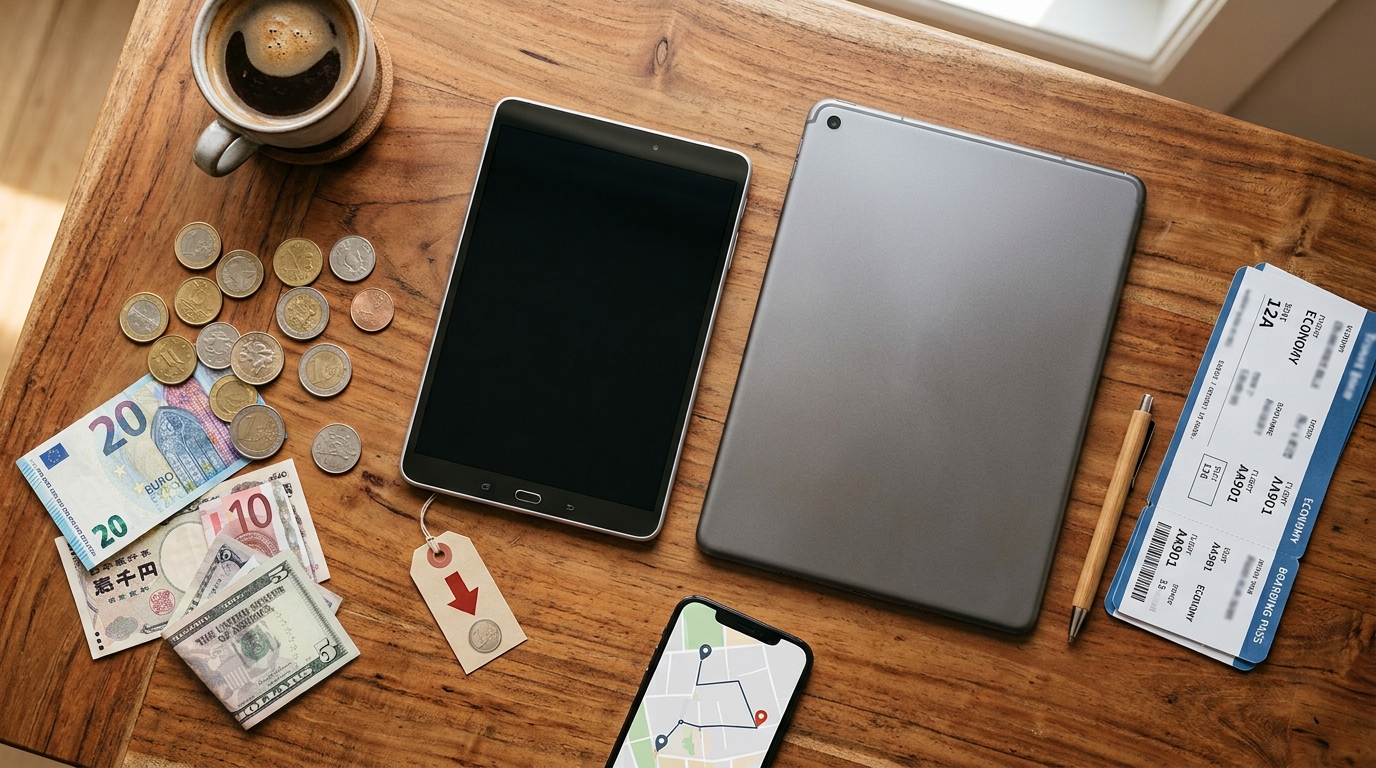
A recent example. I wanted a bigger tablet. The obvious move was an iPad, and the obvious move was expensive. So I looked wider — same requirement, different brands — and ended up with a OnePlus Pad 2 for roughly half the price of the iPad I’d been eyeing. It does everything I wanted a big tablet to do, and I’m genuinely happy with it. The only thing I “lost” was the logo on the back.
The habit: before any purchase, spend a little time comparing brands that offer the same function at different price points. You’ll regularly find something performing nearly identically for far less. The expensive option has to earn its premium — it doesn’t get it automatically for being well-known.
Watch what a purchase locks you into
Price isn’t the only cost. Some products are cheap to buy and expensive to live with, because they lock you into an ecosystem you can’t easily leave.
Years ago I switched from iPhone to Android and never looked back. The hardware often costs less for equivalent specs, but the real win was freedom: Android is far more configurable, and you’re not fenced in by one company deciding what you can and can’t do with your own device. That’s a form of saving too — not just money today, but the freedom to pick the cheapest or best option tomorrow instead of whatever the ecosystem permits.
When you buy, ask what the thing ties you to: proprietary accessories, subscriptions, refills, a walled garden. The slightly cheaper, more open option often saves you far more over the years you actually own it.
Shop across borders — and while you travel
This one surprises people, and it’s saved me real money. Prices for the exact same product can differ enormously between countries — not by a few percent, but sometimes dramatically. Retailers price for their local market, not for you.
So before I buy anything of any size, I check what it costs elsewhere, including shipping. That last part matters: a cheaper sticker price abroad isn’t a deal if shipping erases it, so compare the full landed cost. But often enough, even with shipping added, buying from another country comes out clearly ahead.
The close cousin of this: buy things while you travel. Some products are simply cheaper, easier to find, or only sold in certain countries. If I’m going somewhere anyway, I plan to pick up items that cost more or aren’t available back home — the “shipping” is just my suitcase. Local specialities, electronics that are cheaper in their region of origin, brands that never reached my market: a trip can pay for a chunk of itself if you shop deliberately.
The hotel trick that beat my default
I used to book almost everything on Booking.com out of pure habit. Then I discovered it often isn’t the cheapest — and the way I found out is a tip in itself.
I was looking at hotels on Google Maps, searching an area and clicking individual hotels to see where each one could be booked. That’s when it clicked: for any given hotel, Google shows the price across multiple providers side by side — Booking, Hotels.com, Agoda, the hotel’s own site, and others. And they’re frequently not the same. The identical room, identical dates, can be noticeably cheaper on one than another.
So now my routine is simple: find the hotel I want, let Google Hotels show me every provider’s price for it, and book the cheapest. My old default gets beaten regularly. Two things make it even better:
- Check the hotel’s own website too. Booking platforms charge hotels a hefty commission, so the direct rate is often lower — and booking direct can come with perks the middlemen don’t offer.
- Use Google’s price history. It shows whether the current rate is unusually high or low for that hotel, so you know if you’re catching a good moment or an inflated one.
Google Hotels isn’t a booking site itself — it’s a comparison tool that shows everyone’s price at once, taxes and fees included. Treat it as your discovery step, never your autopilot.
Travel smart, not sparse
The same logic runs through the rest of how I travel: spend where it matters, don’t overpay where it doesn’t.
- Go off-peak. Flying mid-week and travelling in the shoulder seasons — just before or after peak — is markedly cheaper and less crowded. Flexibility on where helps too: sometimes a flight one direction costs a fraction of one elsewhere in the same period.
- Skip luxury you won’t experience. On most trips you’re out exploring, not sitting in your room. A clean, comfortable room does the job; I’d rather put the money into experiences and meals I’ll actually remember. This isn’t going without luxury — it’s buying it where you’ll feel it.
- Let a rewards card do quiet work. A travel or cashback card offsets a small percentage of everything you spend, which adds up over a year — as long as you clear the balance every month so interest never eats the reward.
Buy secondhand for fast-depreciating things
New cars, electronics, furniture, bikes, tools, sporting gear — these lose a big share of their value the moment they’re used, even though they’ve barely changed. Buying them secondhand from a reputable seller gets you most of the useful life for a fraction of the price.
This pairs perfectly with the anti-brand mindset: a lightly-used previous-generation model from a good brand often beats a brand-new budget one, for less than either. Let someone else pay the “new” premium and the first year’s depreciation.
Time the big purchases
Almost everything has a season. Electronics dip around the big autumn sales, winter clothing collapses in price come spring, garden furniture is cheapest as summer ends. If a purchase isn’t urgent, park it until its cheap window arrives instead of buying on impulse at full price. A short wait is often the single biggest discount available.
Which leads to a habit worth more than any individual deal: the waiting rule. For anything non-essential, I sit on it for a week. A surprising amount of the time the urge is gone and I realise I never really wanted it. The purchases that survive the wait are the ones worth making.
Plug the silent leaks
The money that disappears without you noticing is the easiest to recover, because cutting it costs you nothing you’ll miss.
- Audit your subscriptions. Almost everyone pays for a few services they no longer use. Go through every subscription, app and membership and cancel anything you haven’t touched in three months. Pure money back, zero downside.
- Negotiate — and be willing to actually switch. Call your internet, phone and insurance providers once a year and ask for a better rate. Retention discounts are real and often generous, but only if you ask — and the bigger win is being genuinely prepared to leave. I’ve changed mobile providers several times, and each switch saved a meaningful amount. When I moved my whole TV, internet and phone bundle to a different provider, the bill dropped by almost half. Loyalty is rarely rewarded; it’s usually just charged for.
- Let loyalty and cashback run in the background. Where you’re shopping anyway, a loyalty card or cashback app returns a small slice with no change to your behaviour. Set it up once and forget it.
Everyday habits that add up
None of these is dramatic on its own, but together they move the needle:
- Cook more than you order in. Restaurant and delivery meals cost several times their home-cooked equivalent. You don’t have to give up eating out — just make it the exception, plan meals so food doesn’t rot in the fridge, and the savings show up fast. Cheaper, and usually healthier.
- Do the small repairs yourself. Changing a fixture, fixing a dripping tap, patching a wall — there’s a video for all of it, and each one you handle is money not paid to a tradesperson for a ten-minute job.
- Share the things you rarely use. Expensive tools, camping gear, the occasional big appliance — split the cost with friends or neighbours instead of everyone owning one that sits idle.
Frequently asked questions
Isn’t buying a less-known brand just buying worse quality?
Not if you check first. The point isn’t “cheapest wins” — it’s that a well-known logo doesn’t automatically mean better. Compare the actual specs and reviews for the function you need. Sometimes the premium brand genuinely earns it; often it doesn’t, and a lesser-known name does the same job for far less.
Is buying across borders worth the hassle?
For small items, usually not. For anything of real value, often yes — as long as you compare the full landed cost including shipping, import fees, and warranty implications. Do that maths honestly and you’ll know in a couple of minutes whether it’s a real saving or a false one.
Does the Google Hotels method really beat Booking.com?
Not always — but often enough that checking is worth the 90 seconds. The prices genuinely differ between providers for the same room, and no single site is consistently cheapest. Google shows them side by side so you don’t have to guess. Add the hotel’s own website to the comparison and you cover the main options.
Do I have to do all of this to see a difference?
No. The easiest wins — cancelling dead subscriptions, switching an overpriced bill, and comparing before a big purchase — already add up to a real chunk on their own. Start there, add the rest as habits, and the total grows over time.
Where the 30% actually comes from
You don’t hit 30% with one heroic cut. You get there by shaving a bit off many things at once: a smarter phone choice here, a cheaper hotel there, a cross-border purchase, a few dead subscriptions cancelled, a switched bill, a purchase that survived the waiting rule and several that didn’t. Stack those and 30% arrives without you feeling poorer — because you’re not living smaller, you’re just not overpaying.
That’s the whole philosophy, and it’s the opposite of penny-pinching. I still buy good things. I still travel, and yes, I still buy the occasional bit of luxury — I just buy it on a good deal, from the right place, at the right time. The goal was never to spend less on life. It was to stop paying extra for brand, convenience and habit that were never giving me anything back.
Featured image by Frugal Flyer on Unsplash.

Marco Socio
Liked this? There's more where it came from.
Get our digest — articles worth your time, no spam, unsubscribe in one click.
Subscribe to Factnetize →