
⚡ Key takeaways
- Linoleic acid itself doesn’t cause inflammation — multiple RCTs confirm this, despite what social media claims.
- Heated seed oils produce toxic aldehydes — this is the strongest, best-supported concern.
- Seed oils are a marker for ultra-processed food — eliminating them usually means eliminating processed food too.
- Your body stores linoleic acid for years — adipose tissue takes 3–4 years to fully turn over after a dietary switch.
Few topics in the health space generate more noise than seed oils. Social media influencers call them poison. Mainstream nutrition scientists call them heart-healthy. Someone is wrong — or, more likely, both sides are leaving out the parts that don’t fit their narrative.
I stopped using seed oils back in 2020. I switched to real butter and extra virgin olive oil for cooking, and I started making my own pasta sauces and dressings instead of buying them off the shelf. It wasn’t a dramatic overnight decision — it started with reading about oxidation, omega-6 ratios, and the sheer amount of industrially processed ingredients hiding in everyday food. Once you start reading labels, you can’t unsee it.
This article is my attempt to be honest about what the evidence actually supports, where the popular claims overreach, and what I changed in practice. If you’re here for a simple “seed oils are toxic” or “seed oils are fine” — this isn’t that article.
What are seed oils?
The term “seed oils” refers to oils extracted from the seeds of plants, as opposed to fruit-derived oils like olive oil or avocado oil. The eight that draw the most criticism — sometimes called the “hateful eight” — are soybean, corn, sunflower, canola (rapeseed), cottonseed, safflower, grapeseed, and rice bran oil.
What makes them different from, say, olive oil isn’t just the source. It’s the processing. Most seed oils are extracted using hexane (a chemical solvent), then refined, bleached, and deodorized at high temperatures. The end product is a neutral-tasting, shelf-stable oil with a high concentration of linoleic acid — an omega-6 polyunsaturated fatty acid.
Linoleic acid is technically an essential fatty acid: your body can’t make it, so you need some from food. The question isn’t whether you need it. The question is how much you’re getting, what form it’s in, and what happens to it when you heat it.
What the critics claim — and what the evidence says
The anti-seed-oil argument rests on three pillars. Each one has a different level of scientific support, and lumping them together — as most online content does — is where things go wrong.
Claim 1 — seed oils cause inflammation
This is the headline claim, and it’s the weakest one.
Multiple randomized controlled trials have tested whether linoleic acid increases inflammatory markers in humans. The consistent finding: it doesn’t. A peer-reviewed review published in Nutrition Today (2026) concluded that clinical trial evidence shows linoleic acid does not promote inflammation or oxidative stress. Research from Johns Hopkins confirms that controlled trials show linoleic acid reduces LDL cholesterol, may increase HDL, and can improve glucose metabolism — with participants showing the highest linoleic acid levels having a 35% lower risk of developing type 2 diabetes.
A large 2025 meta-analysis covering 150 cohort studies found that higher dietary intake and circulating levels of omega-6 were associated with lower risks of cardiovascular disease, cancer incidence, and all-cause mortality.
Does this mean seed oils are health food? Not necessarily. But the blanket claim that linoleic acid itself drives inflammation is not supported by the human trial data.
Claim 2 — heated seed oils produce toxic compounds
This is the strongest claim, and the one most people skip past.
When polyunsaturated fats like linoleic acid are heated to frying temperatures, they oxidize and produce aldehydes — reactive compounds including 4-hydroxynonenal (4-HNE), acrolein, and malondialdehyde. These aren’t theoretical concerns. A study in the Journal of the American Oil Chemists’ Society found that soybean oil heated to 185°C produced significant levels of 4-HNE within two hours, and that these toxic aldehydes transferred directly into food fried in that oil.
A 2015 study by Grootveld’s group found that frying in sunflower oil at 180°C produced aldehyde concentrations exceeding WHO recommended limits. Comparative research showed coconut oil heated for eight hours showed minimal oxidation, while sunflower oil exceeded safe aldehyde levels within the first hour.
A peer-reviewed paper in Frontiers in Nutrition (2021) went further, arguing that the continued recommendation of high-PUFA oils for high-temperature frying is not supported by the evidence on toxic aldehyde formation.
This matters because it’s not about the oil in a salad dressing. It’s about what happens when seed oils meet high heat — which is exactly how most people use them: frying, baking, stir-frying. Olive oil, butter, and coconut oil — all lower in polyunsaturated fats — produce significantly fewer aldehydes at the same temperatures. This is chemistry, not opinion.
Claim 3 — the omega-6 to omega-3 ratio has shifted dramatically
This claim is well-documented. The human diet evolved with an omega-6 to omega-3 ratio estimated at roughly 1:1. Modern Western diets, driven largely by seed oil consumption, have shifted that ratio to anywhere between 15:1 and 50:1.
A 2021 review noted that omega-6 and omega-3 fatty acids compete for the same metabolic enzymes, meaning excess omega-6 can displace omega-3 incorporation into cell membranes. A global analysis of over 500,000 blood samples confirmed that populations with higher omega-6:omega-3 ratios show increased inflammation markers and elevated risk of cardiovascular disease, diabetes, and autoimmune conditions.
There’s a nuance here, though. A 2024 review argued that dietary recommendations shouldn’t be based on the ratio alone, but on absolute intake levels of each fatty acid. In other words: the problem may be less about eating too much omega-6 and more about eating too little omega-3. Both things can be true at once — and the practical fix (reduce seed oil intake AND increase omega-3) addresses both.
The real culprit might be the company seed oils keep
Here’s where it gets interesting. Seed oils aren’t just sitting in your pantry — they’re in almost everything on the supermarket shelf. Chips, cookies, frozen meals, salad dressings, sauces, bread, cereal. If it comes in a package, it almost certainly contains soybean or canola oil.
A BMJ umbrella review (2024) of ultra-processed foods found that greater exposure to these products is associated with higher risk of obesity, type 2 diabetes, cardiovascular disease, cancer, depression, and all-cause mortality.
But here’s the critical question: is it the seed oil causing those outcomes, or the ultra-processed food matrix it’s embedded in? Researchers at Colorado State University put it well: getting corn oil from a bag of chips is not the same as consuming corn oil used to roast vegetables. Stanford and Johns Hopkins researchers make the same point — the seed oil backlash conflates the oil itself with the unhealthy foods it’s commonly found in.
This doesn’t let seed oils off the hook entirely. But it does mean that someone who eliminates seed oils from their diet is almost certainly also eliminating a significant amount of ultra-processed food — and that dietary shift alone would explain most of the health improvements people report.
A note on soy — the GMO elephant in the room
Soybean oil deserves special attention, because it’s the most consumed seed oil in North America and it carries baggage the others don’t.
Over 90% of soybeans grown in the United States are genetically modified to tolerate glyphosate — the active ingredient in Roundup. That means these crops are engineered to be sprayed with more herbicide, not less. A peer-reviewed study comparing GMO soy, conventional soy, and organic soy found that glyphosate-tolerant soybeans contained high residues of glyphosate and its breakdown product AMPA, and that the three types differed in nutritional quality.
The health implications of those residues are still debated. The WHO’s International Agency for Research on Cancer (IARC) classified glyphosate as “probably carcinogenic to humans.” The European Food Safety Authority (EFSA) reached the opposite conclusion. That regulatory disagreement alone should give pause.
My personal decision is straightforward: when over 90% of a crop is genetically engineered to withstand heavy herbicide application, and the resulting product shows up in virtually every processed food on the shelf, I’d rather just skip it. Not because of a single dramatic claim, but because there are better alternatives available (olive oil, butter, animal-based proteins) and no compelling reason to accept the residue risk.
How long do seed oils stay in your body?
This is the part that surprised me.
Your body doesn’t just use dietary fats for immediate energy. It incorporates them into cell membranes and stores them in adipose tissue. The type of fat you eat literally becomes part of your cells.
Red blood cell membranes turn over roughly every 120 days, so the fatty acid composition of your membranes reflects about 2–3 months of dietary intake. If you switch from seed oils to olive oil and butter today, you’d expect to see measurable changes in your membrane composition within two to three months.
But adipose tissue is a different story. Research estimates that the half-life of linoleic acid in adipose tissue triglycerides is 1–2 years, and that adipose tissue requires 3–4 years to fully equilibrate to a dietary change in someone maintaining stable weight.
That means linoleic acid from years of seed oil consumption is physically stored in your fat reserves. When you burn that fat — through exercise, caloric deficit, or fasting — it gets released and metabolized. You’re not carrying “poison,” but you are carrying a biochemical record of your past diet that takes years to fully turn over.
Some online health personalities have dramatized this as “one serving poisons you for three years.” That’s not what the science says. What it does say is that the switch to better fats is a long-term investment — not a weekend detox. The benefits start accruing in weeks (membrane turnover), become measurable in months (blood markers), and reach full equilibrium in years (adipose tissue).
Having made my switch in 2020, I’m now roughly six years in — well past the 3–4 year adipose equilibrium window. Whatever linoleic acid was stored in my fat tissue has largely been replaced by the fats I’ve been eating since: primarily olive oil and butter.
What I actually changed
Knowing all of this, here’s what I changed starting in 2020 — and why.
Cooking fats: I replaced sunflower and canola oil with real butter and extra virgin olive oil. Not because seed oils in a cold salad dressing are dangerous, but because I cook at high heat — and the aldehyde evidence for heated seed oils is the strongest part of the case. Butter and olive oil are more stable at cooking temperatures and produce fewer oxidation products.
Sauces and dressings: I stopped buying pre-made pasta sauces, dressings, and marinades. Not primarily because of seed oils — but because making them myself eliminated a whole category of ultra-processed food from my diet. A homemade tomato sauce has tomatoes, olive oil, garlic, herbs, and salt. A jar from the supermarket has soybean oil, added sugar, modified starch, and a list of additives. The seed oil is just one part of a larger problem.
Processed food in general: Once you start reading labels for seed oils, you realize how much of the supermarket is ultra-processed food. Reducing seed oil intake became a proxy for reducing processed food overall — and that’s arguably where the biggest health benefit lies.
Soy: I avoid soy products entirely. Not because of the testosterone concerns you’ll find on social media — the meta-analyses don’t actually support that claim. But because over 90% of soy is GMO, engineered to tolerate heavy glyphosate application, and soybean oil is the single biggest vehicle for seed oils in processed food. Avoiding soy and avoiding ultra-processed food are nearly the same decision.
Zero tolerance at home, realistic outside: I keep no seed oils in my kitchen. At restaurants, I don’t interrogate the chef — cooking oils are mostly out of my control in that setting, and the occasional exposure isn’t worth the social friction. The goal is to control what I can control, consistently, over years. The tissue turnover science confirms that consistency matters more than perfection.
Omega-3 supplementation: I take 1,200 mg of EPA+DHA daily. This addresses the omega-6:omega-3 ratio from the other side — instead of only reducing omega-6, I’m actively increasing omega-3.
The honest summary
The seed oil debate is a case study in how health information gets distorted — by both sides.
The anti-seed-oil movement gets some things right: heated seed oils produce toxic compounds, the omega-6:omega-3 ratio has shifted dramatically, soy is dominated by GMO monoculture, and seed oils are a marker of ultra-processed food. But it wraps these valid points in exaggeration, cherry-picked studies, and sensationalism that undermines its own case.
Mainstream nutrition science gets some things right too: linoleic acid in normal dietary amounts doesn’t cause inflammation, and replacing saturated fat with polyunsaturated fat does improve cardiovascular markers. But it tends to dismiss concerns about oxidation at cooking temperatures, downplay the ultra-processed food context, and gloss over the GMO/glyphosate question.
The practical takeaway: cook with stable fats (butter, olive oil, coconut oil), make your own food where you can, skip the soy, reduce ultra-processed intake, supplement omega-3, and don’t stress about the occasional restaurant meal. This is a long game — measured in months and years, not meals. And six years in, I can tell you the hardest part isn’t the diet. It’s reading labels and realizing how much of what you thought was food is actually an industrial product.
⚠️ Disclaimer
This is a personal self-experiment, not medical advice. I’m a 50+ young applying published research to my own body — your physiology, history, and risks are different. Nothing here is a recommendation to start, stop, or change any supplement, medication, or dietary habit. Talk to a qualified doctor before acting on anything you read.
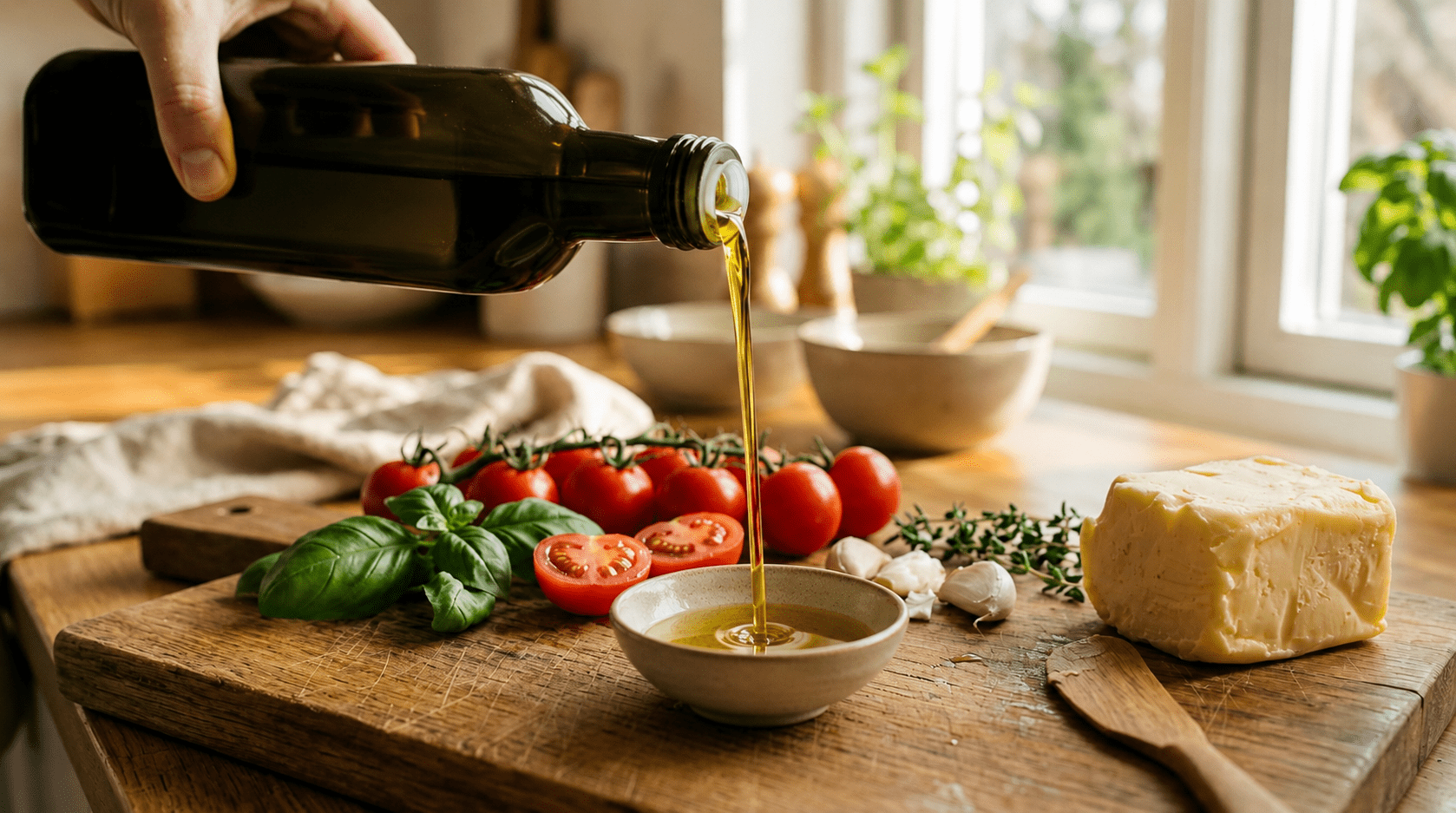
Featured image generated with AI.

Pablo Vicento
Liked this? There's more where it came from.
Get our digest — articles worth your time, no spam, unsubscribe in one click.
Subscribe to Factnetize →



[…] US and Brazilian soy is GM (see my seed oils article). The EU labels GM above 0.9% and organic bans it. US National Academies (2016) found no persuasive […]