⚡ Key takeaways
- In four small trials in adults, eating vegetables and protein before carbohydrates lowered the glucose rise after a meal by 38.8% to 73%, compared with carbs first or a standard mixed meal. A trial in gestational diabetes found glucose 5.87% to 6.06% lower.
- The four trials were small (11 to 18 people) and followed glucose and insulin for two to three hours after one meal.
- Pooling 8 trials, a 2022 meta-analysis found no evidence for recommending carbs later beyond standard dietary advice.
- The trials measured glucose and insulin, not cortisol.
You have probably seen the claim: eat the vegetables and protein before the bread or rice and your blood sugar spikes less. This article goes through what the studies on protein before carbs actually measured, how big the effects were and where the evidence stops.
What the landmark trial tested
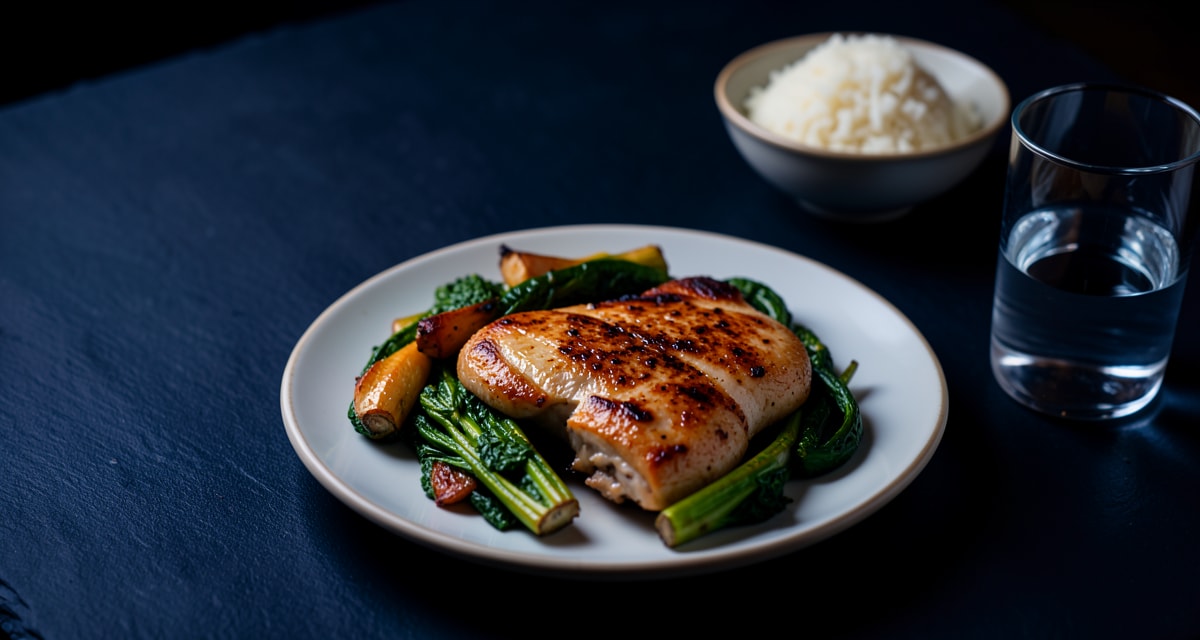
The most cited trial is a 2015 letter in Diabetes Care by Shukla, Iliescu, Thomas and Aronne. They had 11 overweight or obese adults with metformin-treated type 2 diabetes eat the same 628 kcal meal (55 g protein, 68 g carbohydrate, 16 g fat) twice, one week apart. Once the carbohydrate (ciabatta and orange juice) came first, and the protein and vegetables followed 15 minutes later. The other time the order was reversed. Same food, same amounts, only the order changed.
With protein and vegetables first, glucose was 28.6% lower at 30 minutes (p=0.001), 36.7% lower at 60 minutes (p=0.001) and 16.8% lower at 120 minutes (p=0.03). The incremental area under the curve (iAUC), which is roughly the total glucose rise above baseline over the two hours, was 73% lower (p=0.001). Insulin at 60 and 120 minutes was also significantly lower.
What the later trials found
Several follow-up trials used the same logic. The table shows the headline glucose result of each.
| Trial | Who | Glucose result |
|---|---|---|
| Shukla et al. 2015 | 11 adults, type 2 diabetes | iAUC 73% lower with protein and vegetables first vs carbs first |
| Shukla et al. 2017 | 16 adults, type 2 diabetes | iAUC 53% lower and glucose peak 54% lower, carbs last vs carbs first (both p<0.001) |
| Shukla et al. 2018 | 15 adults, prediabetes | iAUC 38.8% lower with protein and vegetables first vs carbs first |
| Shaheen et al. 2024 | 18 healthy adults, UAE | iAUC 40.9% lower vs a standard mixed meal (p=0.03) |
| Murugesan et al. 2024 | 25 women, gestational diabetes | Glucose 5.87% lower at 60 minutes and 6.06% at 120 minutes; two sequential phases, not a crossover |
The 2017 trial added two details. Compared with eating all components together (a sandwich-style meal), carbs last gave a 44% lower glucose iAUC and a 40% lower peak. Insulin iAUC was 24.8% lower than with carbs first (p=0.003), and the gut hormone GLP-1 was higher (p=0.019).
Healthy people respond too. In a trial of 18 young women, eating vegetables first brought the two-hour glucose iAUC down from 140 to 68 mmol/L × min when they ate slowly, and to 67 when they ate fast. In the UAE trial above, insulin iAUC was 31.7% lower as well.
One result needs a caveat. In 18 healthy young women wearing glucose sensors, a five-meal pattern (vegetables, then protein, then carbs, with the carbs divided) spent 1.4% of the time above 7.8 mmol/L, against 4.2% on a conventional three-meal pattern (p<0.01). That comparison changes how often they ate as well as the order, so it cannot be credited to order alone. The 24-hour glucose iAUC did not differ appreciably.
Why protein before carbs might matter
The proposed mechanism is mostly about the gut. A review by Kubota and colleagues describes protein and fat before carbohydrate as promoting secretion of GLP-1 and delaying gastric emptying. Another review, by Nesti, Mengozzi and Tricò, adds that non-carbohydrate preloads enhance glucose-stimulated insulin secretion and reduce insulin clearance, and that protein is the most effective of them at the insulin part.
The same Kubota review flags a possible downside: a meat preload raised GIP more than fish did, and GIP promotes fat storage, which the authors say may lead to weight gain in the long term. That is a hypothesis, not a measured outcome, but it is the part the glucose-focused headlines leave out. For the protein side of this, I went through the numbers in protein intake by age.
What the trials do not show
The headline results above are acute: a single test meal, followed for two to three hours. The longer-term picture is weaker. A 2022 systematic review and meta-analysis pooled 8 trials with 230 participants. Carbs later made little difference to HbA1c (mean difference −0.21%, 95% CI −0.44 to +0.03) or to 2-hour glucose (+4.94 mg/dL, 95% CI −8.34 to +18.22), and all the evidence was rated low or very low certainty. The authors concluded there was “no evidence for the potential efficacy of recommending CL beyond standard dietary advice on T2DM”, where CL is carbohydrate later.
A 2026 systematic review of six studies with 144 participants is more positive on glucose. Of the four studies measuring mean plasma glucose, three reported a significant reduction after a carbohydrate-last pattern, and the authors say the pattern “effectively reduces postprandial glucose excursions in individuals with diabetes”. They also graded the certainty of evidence low and noted significant heterogeneity in study design.
The everyday-life test is a 16-week feasibility trial in 45 adults with prediabetes. The food-order group lost 3.6 ± 5.7 lbs (p=0.017) and HbA1c dipped slightly (−0.1 ± 0.2, p=0.054), but glucose tolerance was unchanged in both groups and the changes were similar between groups. Of the 18 people in the food-order group, 17 (94%) self-reported high adherence and 13 (72%) said eating protein and vegetables first was easy.
Two more open questions. First, which order is best has not been settled: some trials split vegetables and protein into separate steps, others eat them together before the carbs, and the 2018 prediabetes trial found both orders cut glucose peaks while vegetables first needed the least insulin. Second, a cross-sectional study of 832 people with diabetes linked a habit of eating vegetables first to lower odds of nephropathy (OR 0.47) and retinopathy (OR 0.64). The habit was self-reported and the authors note associations cannot show cause.
What about cortisol?
The food-order trials above measured glucose and insulin; cortisol was not among their outcomes, so they cannot say whether eating order changes it. What exists is research on what was eaten, not in what order. In a tracer study of eight healthy men, plasma cortisol rose by about 90 nmol/L after carbohydrate, protein and fat alike. A review of feeding and cortisol puts the pattern after a meal at a rise within 30 minutes, a peak at around 1 hour and a return to baseline in about 2 hours.
How to try it, and how to read the result
In the 2015 and 2018 Shukla trials the courses were 15 and 10 minutes apart: vegetables and protein first, carbohydrate last, same meal. If you wear a glucose sensor, the same meal eaten both ways on different days gives you your own comparison, which is what those trials did on a larger scale.
The American Diabetes Association’s nutrition pages do not mention eating order. Its professional pages emphasize meal patterns, portion sizes, non-starchy vegetables, lean protein and quality carbohydrates, and its consumer Diabetes Plate describes a balance of those three on a nine-inch plate, plus carb counting for matching insulin doses. If you take insulin or other glucose-lowering medication, changing how you eat a meal is worth raising with your care team first.
I did a similar read-through on what the research on seed oils says, and the same habit applies here: check what was measured, in whom and for how long before deciding what a result is worth.
Where this leaves you
Protein and vegetables before carbs is an easy change to try at your next meal and is backed by consistent single-meal data. Treat it as a small tool on top of the basics, and judge it by your own readings rather than by the size of the headline percentages.

Pablo Vicento
Liked this? There's more where it came from.
Get our digest — articles worth your time, no spam, unsubscribe in one click.
Subscribe to Factnetize →